
Industrial Magnetic Separators
-Product Highlights
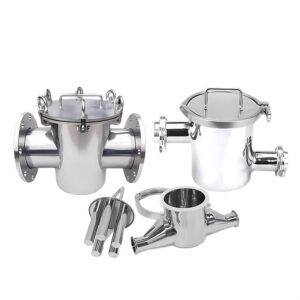
The In-Line Liquid Magnetic Trap – also widely recognized as a magnetic liquid filter, pipeline magnetic separator, sanitary liquid trap, magnetic strainer, or liquid iron remover — is a heavy-duty, pressure-rated stainless steel filtration unit engineered to remove ferrous contaminants from high-velocity liquid lines and slurry streams. Equipped with a concentrated array of high-intensity rare-earth magnetic rods, the trap safely intercepts sub-micron tramp metal, rust particles, and mechanical wear fragments across food, beverage, dairy, chemical, and pharmaceutical processing lines. The lid, handle, and magnetic rod array are welded together as a single removable cartridge, so lifting the lid draws the entire magnetic core out of the liquid path in one motion. Featuring quick-release sanitary tri-clamp and heavy-duty flanged eyebolt closure options, this fully passive system operates with zero electricity, high pressure tolerance, and exceptional ease of cleaning to deliver 99%+ separation efficiency.
-Product Highlights
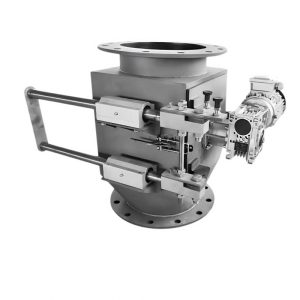
The Automatic Rotary Magnetic Separators are high-efficiency, motorized iron isolation systems designed to handle challenging dry materials that tend to compact or block traditional static grids. Each unit features a heavy-duty housing containing an internal ring array of high-intensity permanent magnetic rods. Driven by a dependable electric gear motor, the entire magnetic rod system rotates slowly within the material stream to continuously prevent material bridging and ensure uniform flow during continuous processing. These advanced systems are uniquely optimized for processing dry fine powders and cohesive granular materials, offering high automation, maintaining a totally enclosed layout that eliminates secondary environmental contamination, and delivering exceptional ferrous separation across the food processing, plastics, lithium battery, and heavy mining industries.
-Working Principle
Automatic Rotary Magnetic Separators function by combining the intensive localized pull of rare-earth permanent magnets with continuous mechanical agitation. As dry materials fall into the top inlet by gravity, the motor drives the internal circular basket of magnetic bars to rotate steadily. This slow rotational movement constantly breaks up cohesive material clusters and shifts the product particles, ensuring every grain passes through the intense magnetic fields without clinging or piling up on top of the bars. Any presence of fine tramp iron, mechanical scale, and paramagnetic fragments is immediately drawn to the moving surfaces and held securely, while the clean, metal-free powder drops smoothly out through the bottom discharge connection.
-Product Highlights
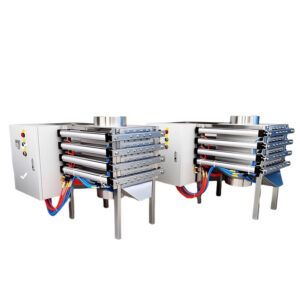
The Fully Automatic Drawer-Type Dry Powder Magnetic Separator is a highly advanced, industrial-grade metal isolation system engineered to provide continuous, high-volume iron purification without manual intervention. This sophisticated equipment integrates a PLC-controlled magnetic layout capable of handling periodic or continuous automatic discharge cycles, making it the perfect solution for dry powders, ultra-fine powders, and free-flowing granular materials on continuous production lines. Delivering a superior iron removal efficiency of more than 99 percent, the system is designed from the ground up to support modern unmanned factory operations. Its robust, fully enclosed housing effectively prevents secondary environmental contamination and product dust leakage, leading to its widespread adoption across high-tech sectors, including the lithium battery, food processing, pharmaceutical, and fine chemical industries.
-Product Highlights
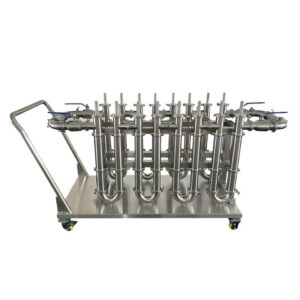
The Lithium Battery Slurry Magnetic Filtration Cart is a high-performance, mobile pipeline-type magnetic filtration system precisely engineered for continuous slurry processing and high-purity material transfer. Powered by high-intensity permanent magnetic sources and an intricate configuration of multi-layer magnetic rods or specialized magnetic media, this mobile unit efficiently removes microscopic iron contaminants and paramagnetic particles from viscous fluids within a completely sealed flow channel. Designed specifically to meet the rigorous quality standards of the lithium battery manufacturing, high-grade ceramic processing, and fine chemical industries, this versatile filtration cart offers options for manual or automated self-cleaning mechanisms, flexible installation positioning, and easy mobility across varied workshop environments.
– Product Highlights
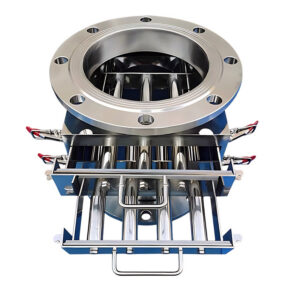
The Powder Hopper Drawer-type Magnetic Separator is a high-efficiency industrial purification system featuring a heavy-duty stainless steel housing fitted with a built-in, high-intensity magnetic grid assembly. Engineered specifically for dry powders, structural silos, vertical chutes, and material pipelines, this advanced equipment offers highly effective fixed-point interception of metallic contaminants while operating with zero electrical energy consumption. This versatile box-type separation technology is widely adopted within clean processing environments across the food, pharmaceutical, lithium battery, plastics, and ceramics industries. By safeguarding downstream equipment from mechanical abrasion and improving final material purity, it achieves a certified ferrous removal efficiency of over 99 percent.
-Product Highlights
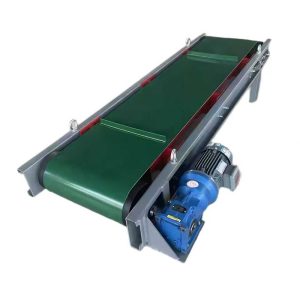
The High Gradient Magnetic Separators (HGMS) represent an advanced class of industrial purification and mineral dressing technology engineered to isolate weak magnetic particle fractions and fine iron contamination from bulk material streams. The core mechanical framework relies on a high-intensity magnetic roller assembly precision-installed at the discharge end of the integrated processing system. As raw materials reach the termination point of the high-speed conveyor belt, the specialized roller structure projects a concentrated, ultra-high-gradient magnetic field to instantly capture ferromagnetic impurities embedded within the bulk material. By brilliantly utilizing the machine’s forward material inertia in combination with the intense localized pulling force of the roller, ferromagnetic impurities are deflected into a dedicated collection chute while the clean product flows unobstructed, completing a fast and highly efficient automated sorting process.
Find the Right Magnetic Separator for Your Process
The right magnetic separator depends on how the material moves through the production line, the size and type of contamination, the required product purity, and the preferred cleaning method. Use the guide below as a starting point.
| Material or process | Recommended equipment | Main purpose |
| Free-flowing powders and granules | Drawer-type magnetic separator | Remove ferrous particles from gravity-fed materials |
| Cohesive or bridging powders | Rotary magnetic separator | Maintain material flow while capturing metal contamination |
| Liquids and slurries | In-line liquid magnetic trap | Remove fine ferrous particles from pipeline materials |
| Lithium battery slurry | Magnetic filtration cart | Support mobile, high-purity slurry filtration |
| Continuous automated lines | Fully automatic drawer separator | Reduce manual cleaning and production interruption |
| Fine or weakly magnetic particles | High-gradient magnetic separator | Improve fine-particle capture and material purity |
Not sure which magnetic separator fits your process? Send us your material type, processing capacity, operating temperature, and installation dimensions – Ask an Engineer
Industrial Magnetic Separator Selection Guide
Ferrous contamination can reduce product quality, damage downstream equipment, and interrupt production. A properly selected magnetic separator captures unwanted iron and magnetic wear particles before they reach critical processing equipment. Selection should be based on the material, flow conditions, contaminant characteristics, operating environment, and cleaning requirements rather than magnetic strength alone.
Select a Magnetic Separator by Material Type
Dry, free-flowing powders and granules
Drawer-type and grate magnetic separators are commonly installed in gravity-fed chutes, hoppers, and vertical outlets. The material passes through or across a magnetic grid, allowing ferrous particles to be captured before the clean material continues to downstream equipment.
Cohesive, lumpy, or bridging powders
Fine powders and cohesive blends may accumulate on a stationary magnetic grid and restrict material flow. A rotary magnetic separator keeps the magnetic rod assembly moving through the product stream, helping to break up material clusters and maintain more consistent contact with the magnetic surface.
Pneumatic and vacuum conveying lines
Inline magnetic separators can be configured for pressure or vacuum conveying systems. The housing, connection type, operating pressure, and acceptable pressure drop should be confirmed for the specific process before equipment selection.
Liquids and slurries
In-line liquid magnetic traps use magnetic rods or magnetic media positioned inside the product flow to capture fine ferrous particles, rust, and mechanical wear debris. Suitable housing material, viscosity, temperature, pressure, cleaning method, and sanitary requirements should be confirmed for each application.
Magnetic Strength and Separation Performance
Surface Gauss is an important equipment specification, but it should not be used as the only selection criterion. Separation performance is also affected by magnetic field gradient, contaminant size and composition, material depth, flow velocity, product contact, and the distance between the contaminant and the magnetic surface.
MagnetGlobal can configure magnetic systems with different surface strengths according to the equipment type and application. The appropriate magnetic strength should be determined based on the material, target contaminant size, flow conditions, and required product purity.
Operating Temperature and Magnet Selection
Operating temperature affects magnet selection and long-term magnetic performance. Standard NdFeB magnetic circuits are suitable for many industrial processes, while heat-resistant NdFeB or SmCo materials may be considered for higher-temperature environments. The magnetic grade and complete system design should be selected according to the continuous operating temperature, possible temperature peaks, installation conditions, and required service life.
Certain custom SmCo configurations may support operating temperatures up to 350 C, subject to magnetic grade and system design verification.
Stainless Steel Construction and Cleaning Options
SUS304 stainless steel is commonly used for dry, non-corrosive bulk materials and general industrial processing. SUS316L may be preferred for corrosive materials, weak acids or alkalis, salty washdown environments, and demanding food or chemical applications.
Available cleaning concepts may include manual cleaning, easy-clean sleeve systems, and automated discharge configurations. The appropriate option depends on contaminant loading, required cleaning frequency, production continuity, operator access, and hygiene requirements.
Quality and Application Requirements
Magnetic separation equipment can be configured with welded stainless steel housings, sanitary connections, polished product-contact surfaces, and application-specific sealing materials. The exact construction and documentation should be confirmed according to the selected model and project requirements.
For combustible-dust or hazardous-area applications, provide the required zone classification and site conditions so that the complete equipment configuration and applicable certification requirements can be evaluated. Permanent magnetic elements do not require electrical power, but motorized equipment, sensors, control systems, and the complete installation may introduce additional compliance requirements.
Information Required for Equipment Selection
To recommend a suitable magnetic separator, MagnetGlobal engineers typically evaluate:
- Material name and physical characteristics
- Dry powder, granule, pellet, liquid, or slurry
- Particle size, viscosity, and bulk density
- Required processing capacity or flow rate
- Operating temperature and pressure
- Target contaminant type and particle size
- Required product purity or downstream protection objective
- Available installation dimensions and connection standard
- Cleaning frequency and automation requirements
- Applicable food, chemical, sanitary, or hazardous-area requirements
Frequently Asked Questions
Q: What is a magnetic separator used for?
A: A magnetic separator removes unwanted ferrous and magnetically responsive contaminants from powders, granules, liquids, slurries, and other process materials. It can help improve product purity, protect downstream equipment, and reduce production interruptions caused by tramp metal.
Q: How do I choose the right magnetic separator?
A: Selection depends on the material type, particle size, flow rate, operating temperature, pressure, contaminant size, required product purity, installation space, and preferred cleaning method. Providing these parameters allows the manufacturer to recommend an appropriate magnetic strength and equipment configuration.
Q: What materials can an industrial magnetic separator process?
A: Industrial magnetic separators can be configured for dry powders, granules, pellets, liquids, viscous products, and slurries. The appropriate design depends on how the material moves through the production line and whether it tends to bridge, compact, or adhere to magnetic surfaces.
Q: What is the difference between manual-clean and easy-clean drawer magnetic separators?
A: With a manual-clean unit, the operator removes captured contamination directly from the magnetic tubes. An easy-clean design uses outer sleeves around the magnetic cores. When the magnetic cores are withdrawn, the captured contamination is released from the sleeve surface, reducing cleaning time and direct handling.
Q: Should I choose SUS304 or SUS316L stainless steel?
A: SUS304 is commonly used for dry, non-corrosive bulk materials and general industrial applications. SUS316L may be preferred for corrosive products, weak acids or alkalis, salty washdown environments, and demanding food or chemical processing conditions.
Q: How often should a magnetic separator be inspected and cleaned?
A: The interval depends on contaminant loading, material flow, required product purity, and the magnetic separator design. High-purity production lines may require inspection once per shift or according to a validated quality procedure. Processes with higher contaminant loading may require more frequent cleaning or an automatic cleaning configuration.
Q: Does a higher Gauss rating always provide better separation?
A: No. Surface Gauss is only one factor. Magnetic field gradient, contaminant size and composition, material depth, flow velocity, product contact, and the distance from the magnetic surface also affect separation performance. The system should be selected for the complete process rather than the highest available Gauss value.
Q: Can MagnetGlobal manufacture a custom magnetic separator?
A: Yes. MagnetGlobal can develop round, square, rectangular, and offset magnetic assemblies with application-specific housings, flanges, deflectors, handles, cleaning systems, and installation dimensions. Share your process data and drawings so the design can be evaluated.
Contact Us