As global sustainability mandates accelerate, recycling industries face unprecedented volumes of complex feedstocks. From end-of-life electronic waste (E-Waste) and automotive shredder residue (ASR) to scrap from lithium-ion battery production, separating ferrous metals from valuable non-ferrous and precious materials is critical. At MagnetGlobal, we engineer high-intensity magnetic separation equipment tailored to meet the rigorous demands of modern recycling plants.
1. The Role of Magnetic Separation in E-Waste Processing
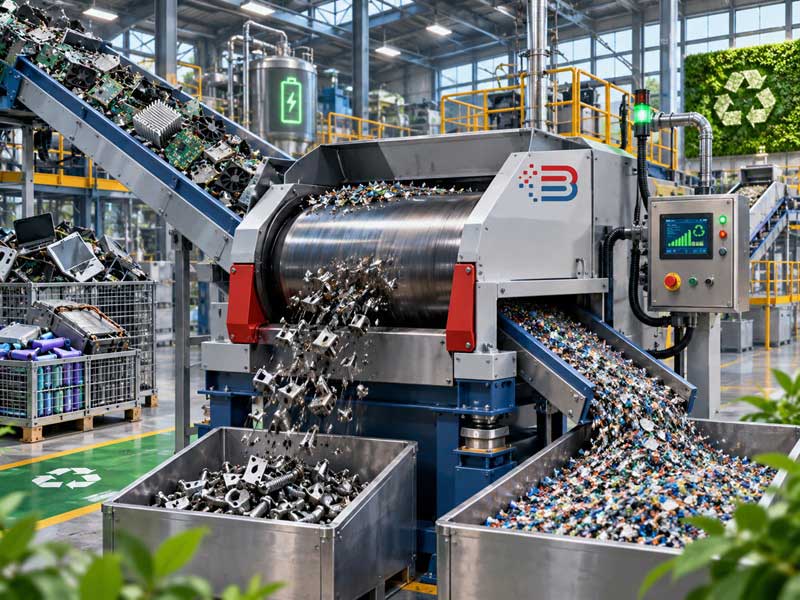
Electronic waste contains a complex matrix of plastics, circuit boards, copper, aluminum, and ferrous structural elements. Before material can be fed into shredders and eddy current separators, bulk iron and tramp steel must be extracted to prevent catastrophic damage to downstream cutting blades and crushers.
Equipment Solution: Utilizing heavy-duty cross-belt overband magnetic separators and magnetic head pulleys over conveyor lines ensures continuous, automated removal of large tramp iron from high-speed material streams.
2. Purifying Black Mass in Lithium-Ion Battery Recycling
With the exponential growth of electric vehicles (EVs), recycling spent lithium-ion batteries and production scrap has become a multi-billion-dollar sector. During mechanical shredding and black mass preparation, microscopic iron, nickel, and stainless steel wear particles can contaminate active cathode materials.
Because these ferrous contaminants negatively impact battery chemistry and safety, processing lines require ultra-high-field-strength neodymium magnetic rods and multi-tier magnetic grates operating at 10,000 to 12,000 Gauss to capture sub-millimeter metallic wear debris.
3. Protecting Shredders and Downstream Sorting Systems
Recycling machinery operates under extreme abrasive conditions. Unchecked work-hardened steel pieces or massive tramp iron bolts can jam shredding chambers, causing expensive downtime and safety hazards. Incorporating suspended permanent magnets ahead of sizing screens ensures structural asset protection and consistent throughput.
Summary: Key Takeaways for Recycling Plant Engineers
- Asset Protection: Use heavy-duty overband magnets to catch large tramp iron before shredding.
- Purity Enhancement: Deploy 10,000+ Gauss magnetic grates and bars for fine metal extraction in powder and black mass circuits.
- Custom Durability: Specify heavy-gauge wear-resistant stainless steel housings to withstand abrasive recycling environments.
Frequently Asked Questions (FAQ)
Q: What is the difference between overband magnets and magnetic head pulleys in recycling?
A: Overband magnets are suspended above conveyors to lift tramp iron out of the burden stream, whereas magnetic head pulleys replace standard discharge pulleys, automatically discharging ferrous items as material falls off the belt.
Q: Can magnetic separators handle abrasive shredded battery materials?
A: Yes. Housing units can be reinforced with extra-thick armor plates or wear-resistant liners (such as manganese steel or ceramic tiles) to protect against abrasive particle impact.