Handling dry powders, grains, chemicals, and food ingredients in bulk processing presents a major engineering challenge: material bridging and caking. When cohesive powders flow through traditional static magnetic grates, they often pack tightly between magnetic tubes, causing severe pipeline blockages. Choosing between a standard multi-tier drawer magnet and a motorized rotary magnetic separator is critical for maintaining uninterrupted production. At MagnetGlobal, we help engineers optimize their powder processing lines for maximum separation efficiency.
1. Static Drawer Magnets: Ideal for Free-Flowing Powders
Drawer-type magnetic filters feature multiple rows of staggered magnetic tubes housed in a robust stainless steel casing. They are exceptionally effective for free-flowing, non-cohesive bulk materials such as plastic pellets, dry silica sand, grain, and refined sugar.
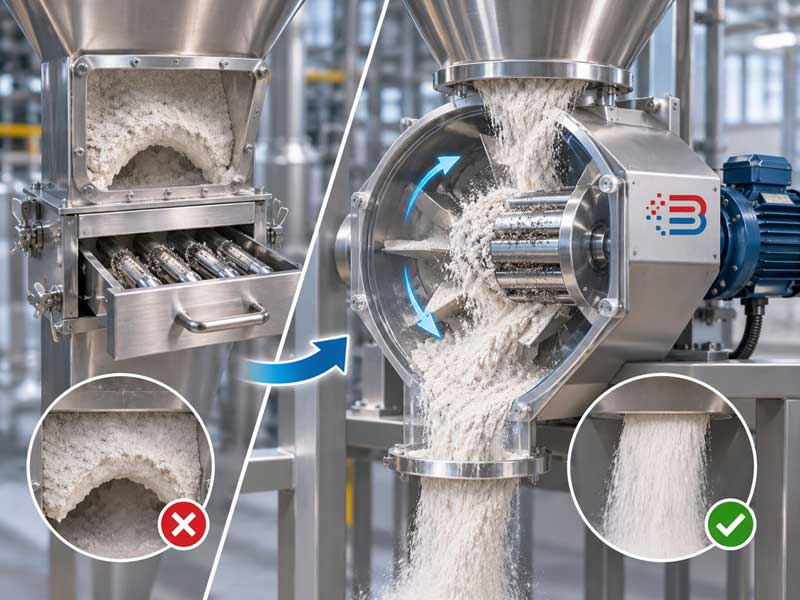
Advantages: Simple mechanical design, zero moving parts, easy manual cleaning, and lower initial capital cost. However, they are prone to bridging if the material has high moisture content or fine cohesive properties (e.g., starch, flour, or fine titanium dioxide).
2. Rotary Magnetic Separators: Preventing Bridging in Cohesive Powders
When handling sticky, hygroscopic, or poorly flowing powders that tend to pack and bridge across static tubes, a rotary magnetic separator is the definitive engineering solution.
The magnetic bars inside a rotary separator continuously spin at low RPM (typically 20 to 30 RPM). This constant rotation breaks up agglomerates, prevents material accumulation on the tubes, ensures 100% product contact with the high-intensity magnetic field (up to 12,000 Gauss), and maintains steady volumetric flow without clogging.
3. Key Selection Factors: Flowability, Moisture, and Capacity
When deciding between drawer and rotary configurations, evaluate the following parameters:
- Flowability Index: Free-flowing granular items suit static drawer magnets; cohesive, fine, or static-prone powders require rotary units.
- Cleaning Frequency: High-contamination streams benefit from easy-clean pneumatic housings or automated rotary cleaning cycles.
- Space and Installation: Ensure vertical drop clearance matches housing dimensions for seamless gravity-chute integration.
Summary: Quick Decision Matrix
- Drawer Magnets: Best for free-flowing plastic granules, dry sand, and coarse grains.
- Rotary Separators: Best for fine flour, starch, milk powder, pigments, and cohesive chemicals prone to bridging.
Frequently Asked Questions (FAQ)
Q: What causes powder bridging on static magnetic grates?
A: Bridging occurs when moisture, fine particle size, or electrostatic charges cause powder particles to cohere and form a physical arch between adjacent magnetic tubes, blocking the aperture.
Q: Can rotary magnetic separators be retrofitted into existing vertical gravity chutes?
A: Yes. MagnetGlobal offers custom flange adapters and mounting transitions designed to fit standard round or square chute configurations in existing plants.