In food processing, dairy manufacturing, and pharmaceutical production, product purity is non-negotiable. Foreign metal contamination poses severe health risks, brand damage, and regulatory penalties. To pass stringent annual audits under HACCP, BRCGS, and FDA frameworks, processing plants must install validated magnetic separation systems. At MagnetGlobal, we specialize in food-grade and sanitary-finish magnetic solutions designed for rigorous hygiene standards.
1. Understanding Sanitary Standards: SUS304 vs. SUS316L
The choice of stainless steel housing directly impacts corrosion resistance during Clean-In-Place (CIP) procedures. While SUS304 is suitable for general dry powder processing, SUS316L is mandatory for applications involving moisture, acidic food ingredients, saline solutions, and aggressive chemical sanitization.
Furthermore, all welds must be full-penetration TIG welds polished to a mirror finish (Ra ≤ 0.8μm or better) to eliminate microscopic crevices where bacteria or fine powder residues could accumulate.
2. High Gauss Intensity vs. Magnetic Field Gradient
A common misconception in sanitary purchasing is that “higher Gauss is always better.” While surface field strengths of 10,000 to 12,000 Gauss are vital for capturing microscopic work-hardened stainless steel wear particles from upstream blenders, the magnetic field gradient (the rate of change of magnetic field strength) is what actually pulls fine ferromagnetic particles against the flow resistance.
Our sanitary magnetic grates and inline liquid traps are engineered with optimized pole spacing to maximize magnetic attraction force across fluid and powder streams.
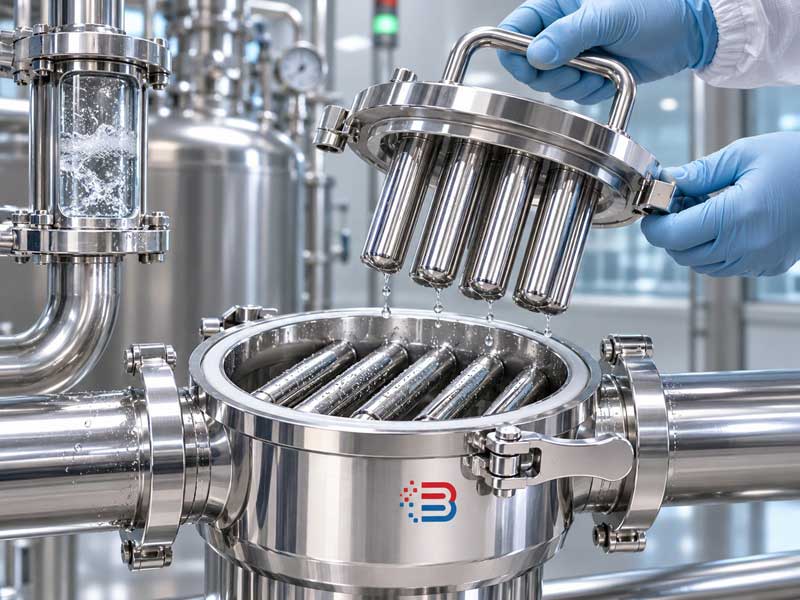
3. Easy-Clean and Quick-Release Features for CIP/SIP Lines
Frequent cleaning is a daily requirement in food and pharma plants. Traditional bolted magnetic grates create labor bottlenecks and risk gasket degradation. Modern facilities utilize easy-clean sleeve designs or pneumatic quick-release drawer magnets that allow operators to safely extract magnetic cores from stainless steel protective wells, causing trapped iron debris to instantly fall away.
Summary: Best Practices for Sanitary Magnet Selection
- Material Integrity: Always specify SUS316L stainless steel with smooth polished welds (Ra ≤ 0.8μm) for washdown and CIP compatibility.
- Certified Field Strength: Ensure magnetic bars deliver 10,000–12,000 Gauss with certified calibration reports.
- Maintenance Efficiency: Implement easy-clean pull-out sleeves to streamline daily hygiene inspections.
Frequently Asked Questions (FAQ)
Q: How often should food-grade magnetic grates be inspected and tested?
A: We recommend conducting visual inspections weekly and testing surface Gauss strength with a calibrated Gaussmeter every 3 to 6 months to ensure magnets have not suffered thermal or mechanical degradation.
Q: Are MagnetGlobal sanitary separators certified for HACCP programs?
A: Yes. Our sanitary equipment is engineered specifically to meet HACCP International guidelines for metal contamination control in food processing.